Zapier
Automate YourGPT Chatbot events with Zapier and thousands of apps.
💡 Connecting Your Chatbot with Zapier
Zapier connects YourGPT with 5,000+ apps, allowing you to automate workflows without writing code.
Before You Begin
Before starting the integration process, make sure you have:
- A YourGPT account: Sign up here
- A Zapier account (free or paid)
Integration Process
Connect to Zapier
Log in to your Zapier account.
Search for YourGPT Chatbot in the Zapier app directory.
Select and connect your "YourGPT Chatbot" to Zapier.
Set Up API Authentication
Head over to YourGPT Dashboard.
Navigate to Integrations ⇒ API Integration ⇒ Generate API key.
Copy your API key for use in Zapier.
Tip
For detailed instructions on generating API keys, visit the API Integration Guide
Create a Session
In your Zap, add a new action and select "YourGPT Chatbot".
Choose New Session as the action.
Provide the widget_uid in the action setup.
The widget_uid can be found in your YourGPT Chatbot Integrations.
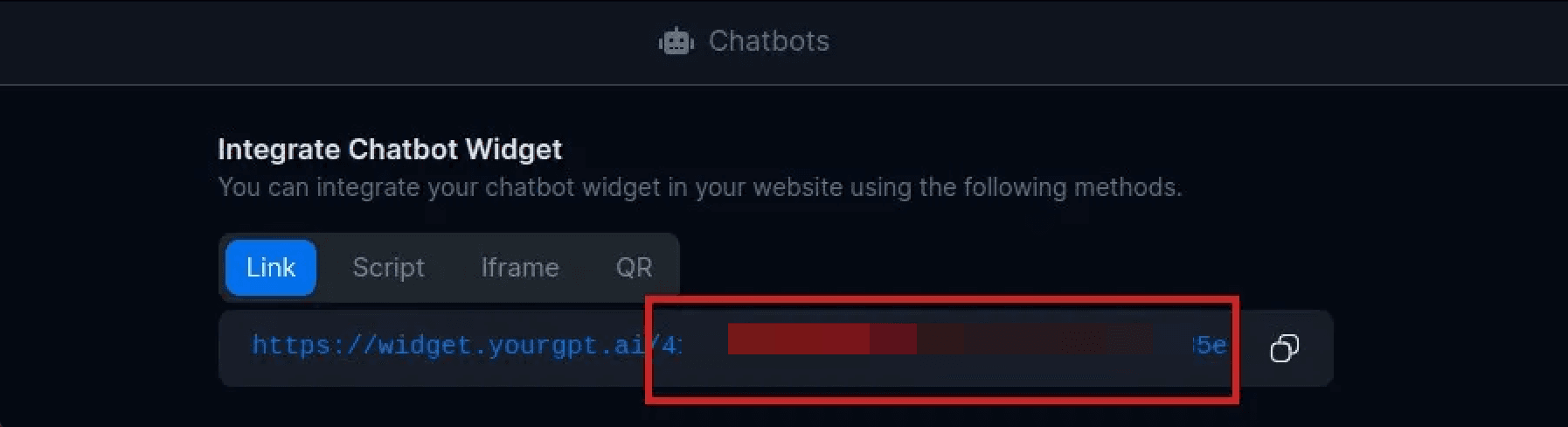
Tip
The New Session action initializes a conversation with your YourGPT chatbot and returns a session_uid that you'll need for sending messages.
Send a Message
Add another YourGPT Chatbot action to your Zap.
Select Send Message as the action.
Configure the following parameters:
widget_uid: The same ID used in the New Session actionmessage: The text content you want to sendsession_uid: Map this from the output of the New Session action
Test and Deploy
Test your Zap thoroughly to ensure all actions work correctly.
Once tested, you can turn on your Zap for production use.
Consider adding error handling for robustness.
Use cases
Auto-draft AI email replies
When a new email arrives, YourGPT reads it and drafts a personalized reply in Gmail — you just review and send.
Trigger on new email
Create a Zap with the Gmail → New Email trigger. Connect your account and set the label to INBOX.
Pass the email to your chatbot
Add the New Session and Send Message actions as described above. In Send Message, map the email's Subject and Body as the message. Testing returns an AI-drafted reply.
Create the draft reply
Add a Gmail → Find Email action to locate the original message, then a Gmail → Create Draft Reply action. Map the Thread ID from Find Email and put YourGPT's message in the body.
Publish
Turn the Zap on. New emails now get an AI-drafted reply waiting in your Gmail drafts.
Capture leads into your CRM
When your chatbot collects a lead, send it straight to your CRM, Google Sheet, or Slack.
Get a webhook URL
Create a Zap with the Webhooks by Zapier → Catch Hook trigger. Copy the webhook URL it generates.
Post the lead from Studio
In your chatbot's Studio flow, after the lead-collection step, add an API Call node:
- Method —
POST - URL — the Zapier webhook URL
- Body — the collected fields, e.g.
name,email,message, mapped from flow entities like{{FLOW.Email}}
Run a Test Request so Zapier captures a sample payload.
Send it to your destination
Back in Zapier, add an action for your destination and map the payload fields — for example Create Contact in your CRM, Create Spreadsheet Row in Google Sheets, or Send Channel Message in Slack.
Publish
Turn the Zap on. Every captured lead now lands in your destination in real time.
By following these steps, you can integrate YourGPT AI chatbot with Zapier. For any questions, contact our team via Live support or Mail Us.